
August 20, 2025 Written by: Daniel Draney
When to Consider Air Duct Repair: Warning Signs Every Homeowner Should Know
Your air ducts act like the lungs of your home — carrying cool air through Texas summers and warm air when a cold front rolls through. When they’re cracked, dirty, or damaged, you feel it fast. Fresh Air Duct Cleaning has seen everything from ducts clogged beyond recognition to ductwork that’s been ignored for years. Knowing the warning signs of faulty air ducts can mean the difference between clean, comfortable air and living inside a giant dust cloud. Here’s how to spot trouble before it gets expensive.
Your Trusted Home Service Experts in Texas
Why Air Ducts Matter
Ducts carry conditioned air to every room in your home — but they also act as a highway for dust, pollen, pet dander, and construction debris. When ducts are damaged, all of those particles bypass your filters and fly right into the spaces where your family lives, sleeps, and breathes. Clean, intact ductwork is foundational to both indoor comfort and indoor air quality.
The Most Common Air Duct Problems
Air ducts get ignored because we can’t see them. But out of sight doesn’t mean out of danger. The most common problems include cracks, holes, or sections that have come apart at the joints; dust or mold buildup restricting airflow; rodents or insects nesting inside; deteriorated insulation; and poor installation by a previous contractor. If any of these sound familiar, it’s time to call a professional.

Warning Signs You Shouldn’t Ignore
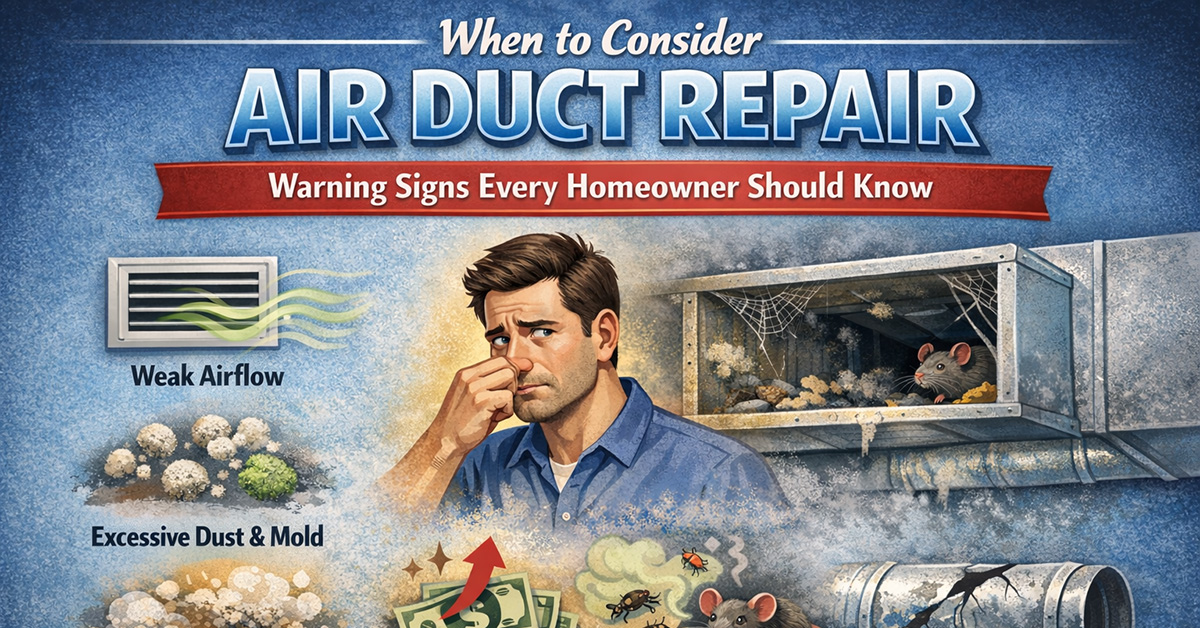
Energy Bills That Suddenly Spike
If your bills have jumped significantly without a change in how you’re using your system, your ducts may be leaking. Holes and cracks force your HVAC to work harder and run longer, sending extra dollars out through the walls and attic instead of cooling your home.
Rooms That Are Too Hot or Too Cold
Uneven temperatures throughout the house — one room freezing, another sweltering — often point to broken or blocked ducts preventing air from distributing evenly. Before blaming the thermostat, consider that the real answer may be above your head.
Dust That Keeps Coming Back
If you clean regularly but the house gets dusty again within days, your ducts may be pulling debris in from your attic or crawlspace. Gaps and bad connections create new pathways for dust to enter, leaving even diligent housekeepers frustrated.
Musty or Funky Odors That Won’t Go Away
Persistent musty smells from your vents often indicate mold, mildew, or even pest droppings inside the ductwork. These odors shouldn’t be dismissed as seasonal — breathing in contaminated air is a genuine health risk that needs to be addressed promptly.
Weak Airflow from Vents
Hold your hand near a vent. If air is barely coming out, or if some vents blow strongly while others barely move air at all, something is blocking or restricting flow. Bent ductwork, blockages, or loose connections can prevent your HVAC system from doing its job no matter how hard it runs.
Mold or Moisture Around Vents
Visible mold growth near vents or duct openings is a serious warning sign. Mold thrives in damp conditions, and if it’s showing up around your ductwork, you may have leaks creating moisture inside the system. Mold spreads quickly and can cause significant respiratory problems if left untreated.
Scratching or Noise from the Ducts
Hearing scratching in the attic or walls? Mice, squirrels, and insects sometimes nest inside ductwork. Their droppings, fur, and nesting materials get blown directly through your vents — contaminating the air throughout your home.
Why Ducts Go Bad Faster in Dallas
North Texas is hard on ductwork. Blazing summers, occasional cold snaps, hail, humidity, and the constant expansion and contraction of metal in extreme temperatures all take a toll. Add in Dallas wildlife — mice, raccoons, and insects that find their way into attics — and ducts that weren’t installed correctly to begin with, and you have a recipe for problems that develop faster than in milder climates. Over time, seals dry out, insulation breaks down, and joints pull apart as the house settles.
What Happens If You Ignore the Warning Signs?
Ignoring damaged ductwork compounds costs over time. Your HVAC system works harder than it should, wearing out faster and needing repairs sooner. Energy bills stay elevated even as comfort decreases. Air quality suffers, increasing respiratory irritation for your family. Mold, once established, is expensive to remediate. Catching problems early — and fixing them — is almost always far less costly than waiting until systems fail.
Can You Check or Fix Air Ducts Yourself?
You can do a basic visual check by removing a vent cover and shining a flashlight inside to look for visible dust, debris, or mold. Listening for whistling or rattling sounds when the system runs can also reveal problems. However, most ductwork is located in hard-to-reach areas, and finding leaks, blockages, or pest damage deep inside the system requires specialized tools and experience. Standard duct tape is not an appropriate repair material — it dries out and fails. For anything beyond a surface-level look, professional help is the right call.
What Happens When Professionals Repair Ducts
A professional duct repair visit involves a thorough inspection using cameras and pressure or smoke tests to identify every problem area. Leaks are sealed with proper materials — never just tape. Damaged sections or deteriorated insulation are replaced. Commercial vacuums and brushes remove accumulated dust, debris, mold, and any evidence of pests. Finally, the system is tested to confirm air is moving freely and efficiently with no remaining leaks.
How to Prevent Duct Problems Before They Start
Change your HVAC filters on schedule — don’t let three months become six. Keep vents clear and unblocked by furniture or clutter. Pay attention if your attic feels damp, as moisture and ductwork are a bad combination. Have your ducts professionally inspected every few years. Seal entry points in your attic to prevent animal intrusion, and address any signs of wildlife activity before they become a duct problem.
Frequently Asked Questions
Ready for Cleaner, Healthier Air in Your Home?
If you’re dealing with high energy bills, strange smells, persistent dust, or uneven temperatures, Fresh Air Duct Cleaning is ready to help. Our trained technicians find problems fast, repair leaks, clear blockages, and get your system running the way it should. Call us at (214) 239-1832 or contact us online to schedule your appointment. Your lungs — and your wallet — will be glad you did.